Borneo

Sabah,Sarawak, Kalimantan, and Brunei,
make up the island of Borneo

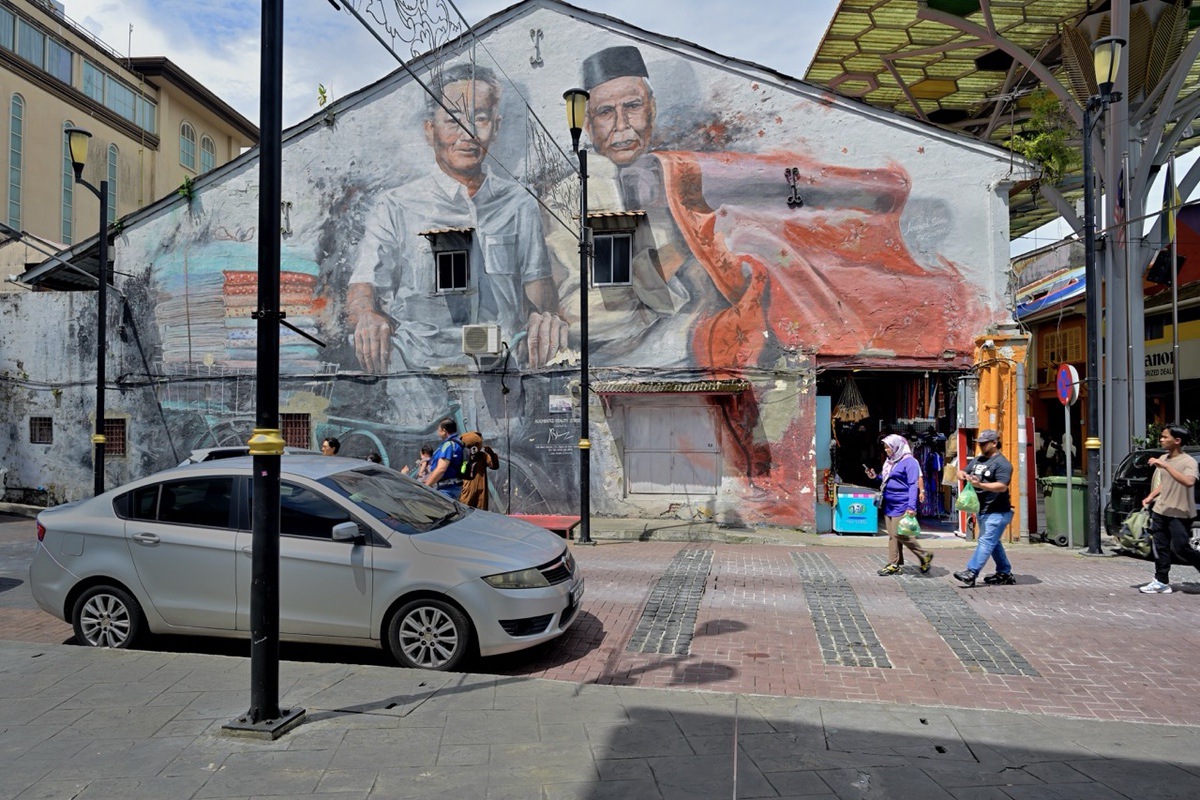
Kuching’s Street art

Kuching’s street art is an outdoor gallery of vibrant murals that celebrate the city’s cultural diversity, history, and wildlife, primarily located in the Old Kuching area along streets like Jalan Power, India Street, Carpenter Street, and the Waterfront. Murals frequently depict orangutans and other local wildlife like the hornbill, and scenes of traditional trades such as tinsmithing and ang ku kueh making.

Central Police station

The Central Police Station in Kuching, also known as Balai Police Sentral, was built in 1931 on Padang Merdeka (now known as Square Ground) to replace an older station located where the General Post Office now stands. It is a well-preserved example of a 1930s government utilities-style building, designed by the Public Works Department.
A practical, utilitarian design typical of colonial police stations in Malaysia.
Painted in the traditional navy blue and white livery of the Malaysian police, unlike the more ornate colonial buildings like the Courthouse, the police station's design prioritizes function and security over decorative elements, making it a distinct part of Kuching's colonial streetscape.

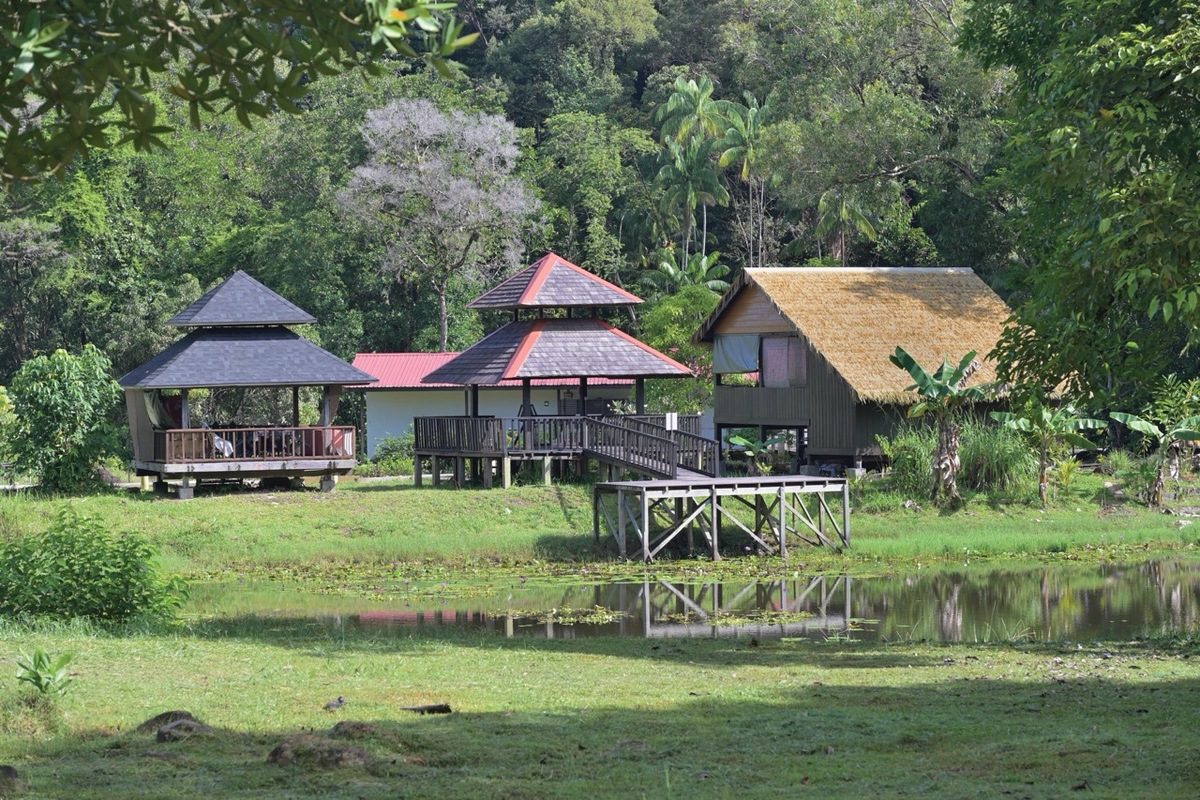
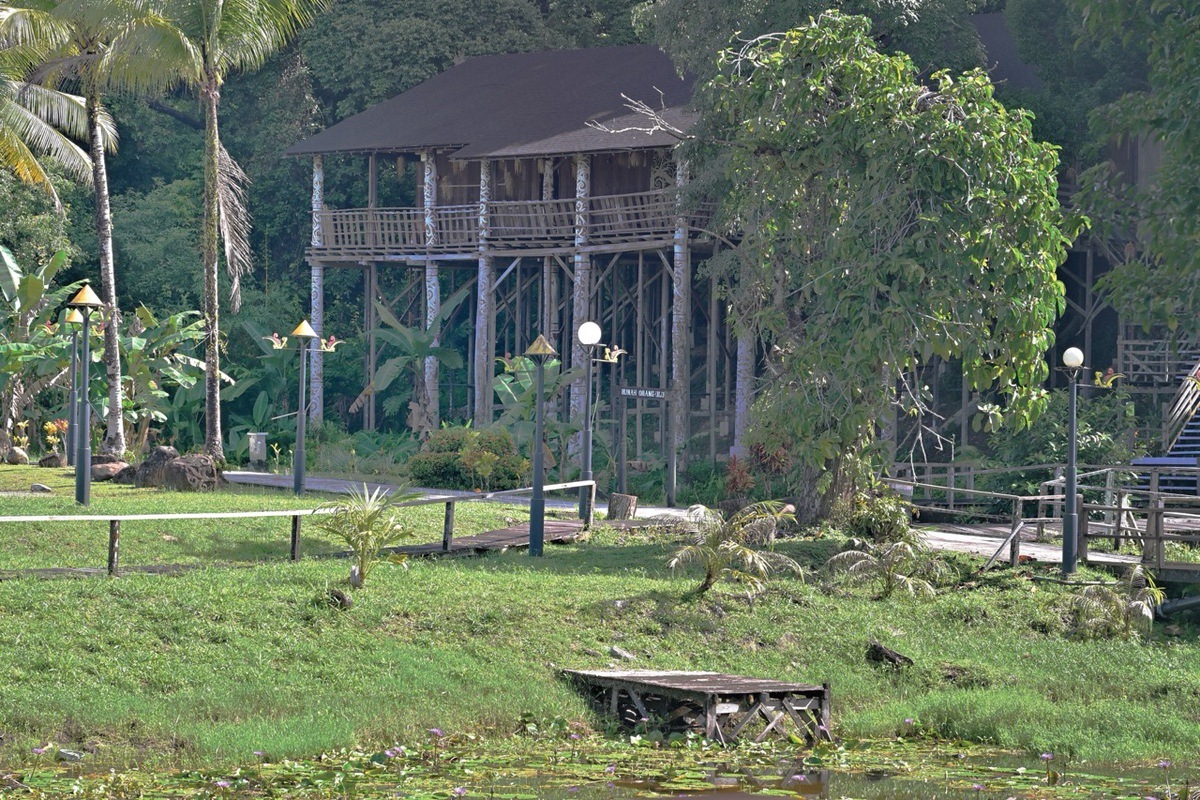
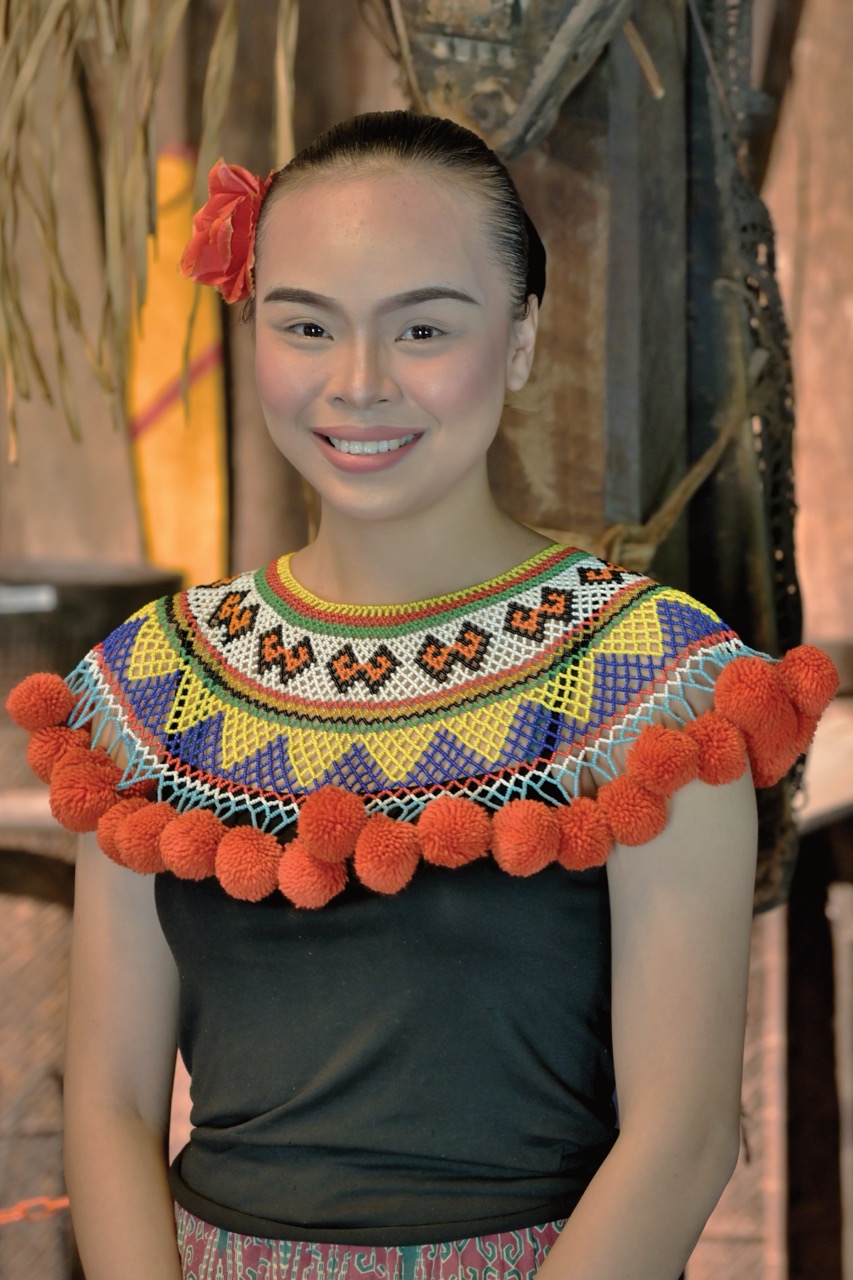
Sarawak Cultural Village

The Sarawak Cultural Village, located about 24–32 km from Kuching at the foothills of Mount Santubong, is an award-winning "living museum" spread across 17 acres. It offers an immersive experience into the diverse cultures of Sarawak’s seven major ethnic groups: Iban, Bidayuh, Orang Ulu, Melanau, Malay, Chinese, and Penan.

Malay House

This stilted timber house reflects coastal Malay culture. It features an open front veranda for receiving guests, elaborate wood carvings, and a communal area with a congkak board (a traditional game). The interior includes simple bedrooms, a kitchen, and an attic for storage, designed for ventilation in the tropical climate.

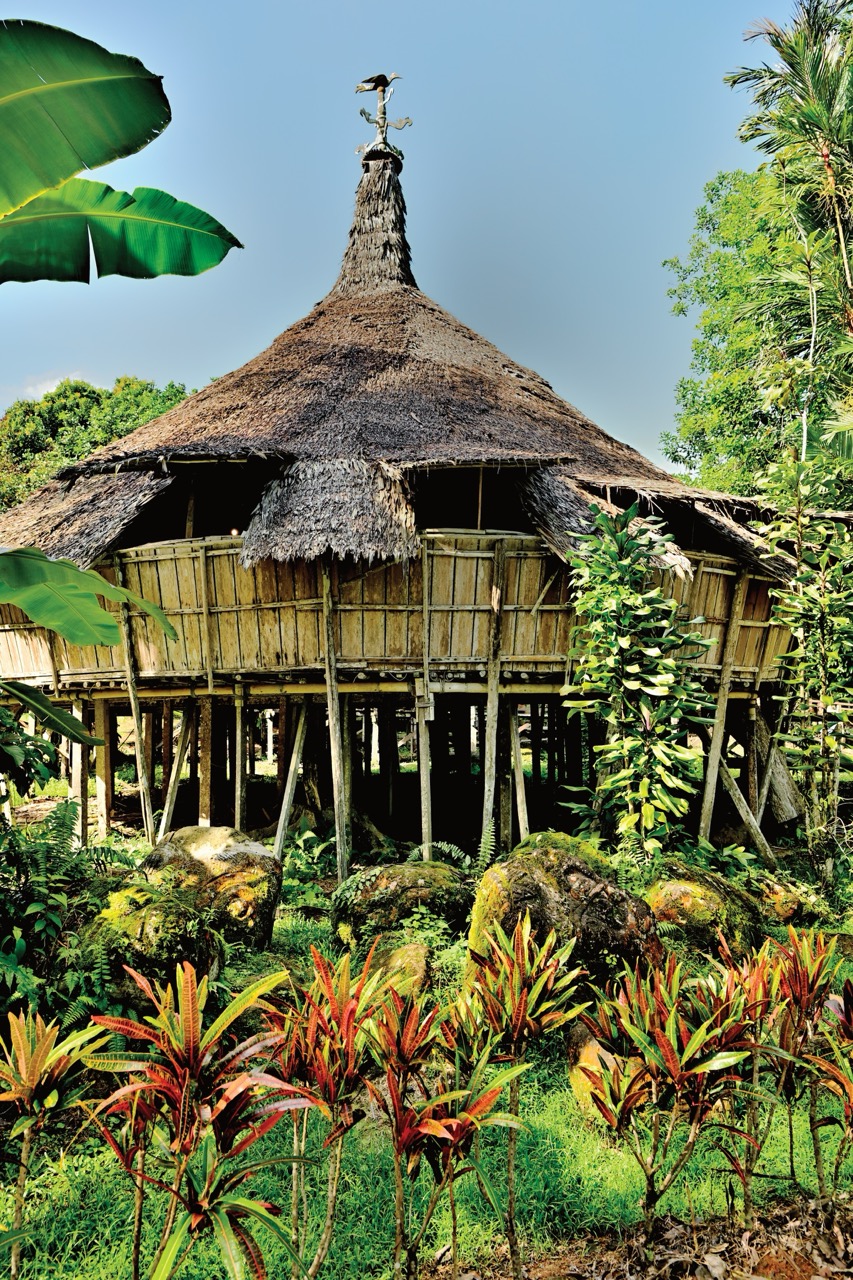
Bidayuh Longhouse

Built by the mountain-dwelling Bidayuh, this stilted bamboo and timber longhouse includes a communal veranda and private family units. A distinctive feature is the barok, a round bamboo watchtower connected by a bridge, which once stored weapons, gongs, and head trophies, and served as a lookout post

Iban in Traditional Dress

The Iban people, also known as Sea Dayaks, are the largest indigenous group in Sarawak.
Historically known for their warrior culture and headhunting practices (discontinued in the early 20th century), they are now predominantly Christian while still preserving traditional animistic beliefs and rituals.
They live in longhouses (rumah panjai), which serve as communal homes and social centres.
Their culture is rich in oral traditions, music, and dance, especially the Ngajat dance, performed during festivals like Gawai Dayak, a major harvest celebration involving feasting, music, and the drinking of tuak (rice wine).